Freedom is the pause
In addiction and emotional reactivity, the distance between feeling and action becomes very small. Discomfort appears, and the mind immediately reaches for escape. Meditation gently widens that distance. In the new space, another response becomes possible.
Not an escape from reality
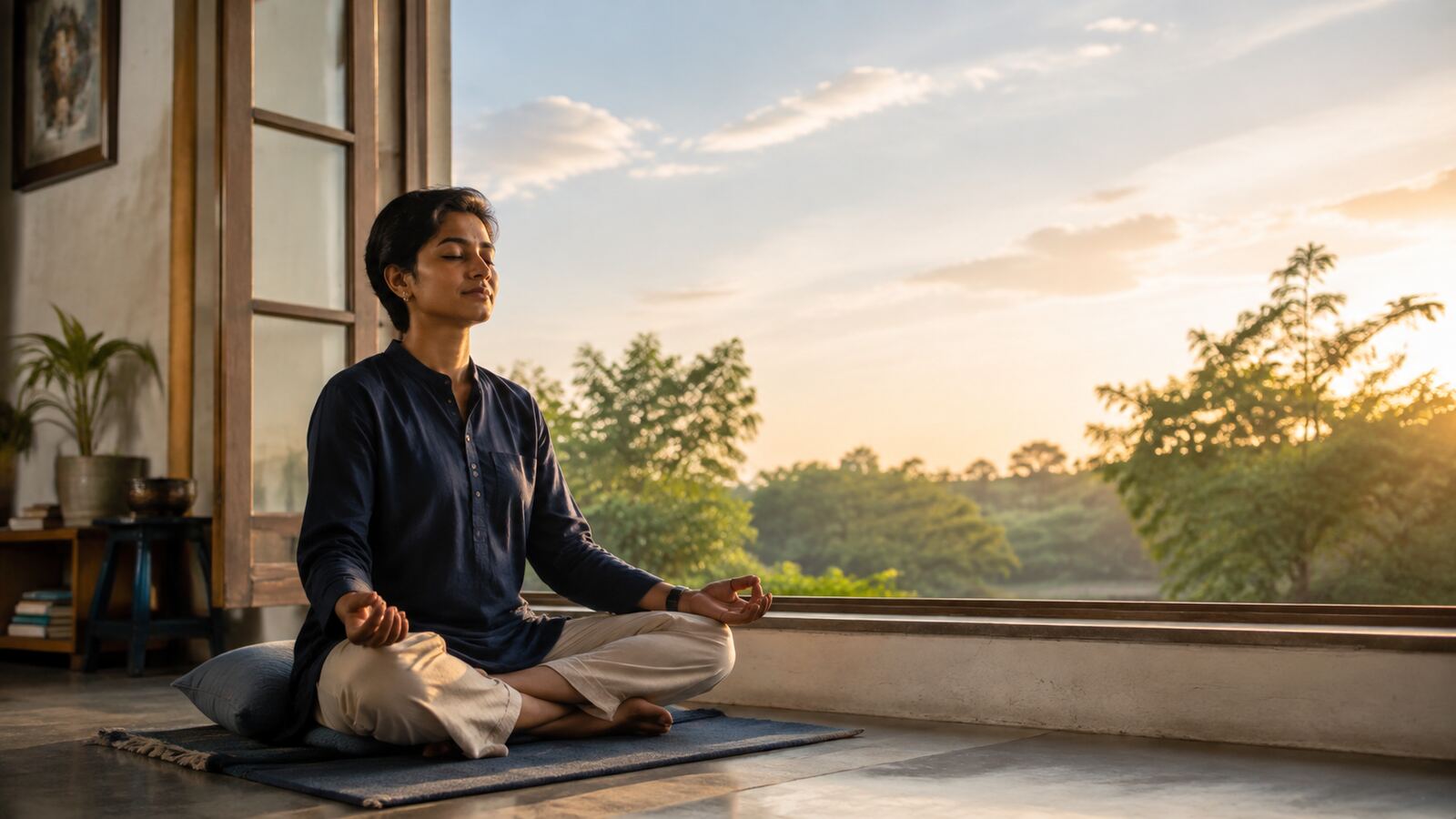
Meditation is sometimes presented as a way to stop thoughts or remain peaceful at all times. That expectation creates frustration. The practice is simpler: notice what is present—breath, sensation, thought or emotion—without judging it and without needing to act on it immediately.
A practical five-minute practice
Sit comfortably with the spine supported. Let the eyes close or soften. Feel three natural breaths without changing them. Notice where the body touches the chair or floor. When thoughts arrive, silently say “thinking” and return to the next breath. Continue for five minutes.
Meeting craving like a wave
Cravings rise, peak and change. During a craving, observe where it appears in the body. Is there pressure in the chest, restlessness in the hands or heat in the face? Breathe and name the sensations. Observation replaces panic with information.
Tratak and focused attention
Tratak meditation—steady gazing at a candle flame or fixed point—can train attention and settle mental restlessness. It should be practised gently, without straining the eyes. The purpose is not performance; it is learning to return.
Inner freedom in daily life
The measure of meditation is not what happens while sitting. It is the moment in an argument when we listen before reacting, the craving we disclose instead of hiding, and the difficult feeling we allow without running away.
Recovery is not the absence of difficulty. It is the growing freedom to choose a healthier response.