What Tratak actually is
Tratak is a traditional concentration practice: sitting comfortably and holding a steady, relaxed gaze on a single fixed point, most often a candle flame, without straining the eyes or forcing focus. When the eyes tire or water, they are allowed to close, and the image of the flame is held gently in the mind's eye before opening the eyes again. मन को स्थिर करने का यह एक सरल और प्रभावी अभ्यास है—it is a simple, effective practice for steadying the mind.
Why a fixed point calms a restless mind
A wandering, restless mind is one of the most common experiences in early recovery—thoughts jump between craving, guilt, planning and worry within seconds. Giving the mind one simple, unmoving object to return to, again and again, trains the same “muscle” that later helps a person notice an urge without immediately obeying it.
How it's used in recovery work
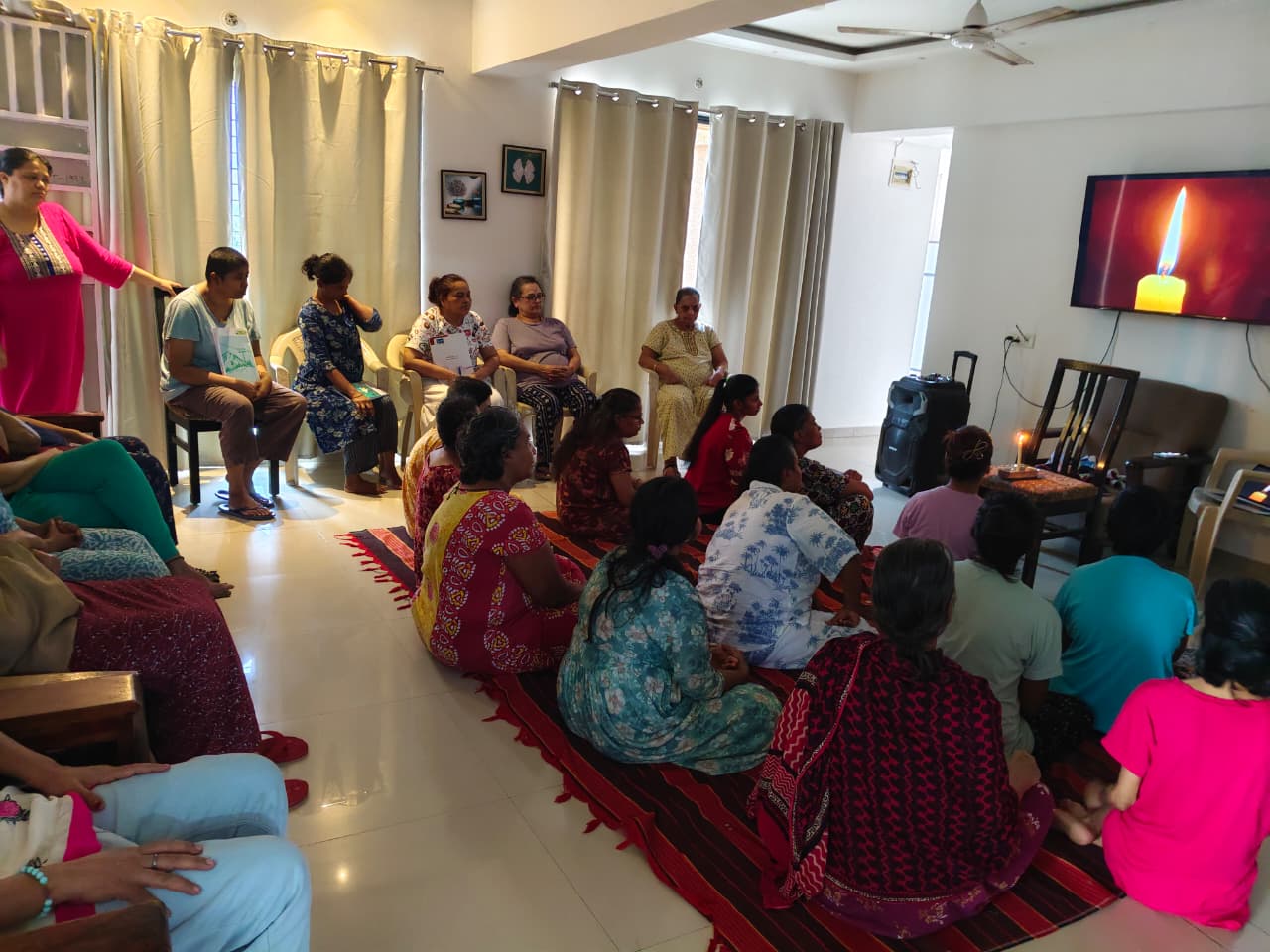
In sessions, Tratak is introduced alongside—not instead of—counselling. Participants practise together in a calm, supported setting, usually for a few minutes at a time, building up gradually. The aim is never to “clear the mind” completely; it's to practise returning attention to one thing, so that skill becomes available during a craving, an argument or a difficult memory.
A simple way to begin
Sit at a comfortable distance from a candle flame at eye level, in a room without a draught. Hold a soft, unstrained gaze on the flame for 30–60 seconds to start. Close the eyes, breathe naturally, and hold the afterimage in your mind without chasing it. Open the eyes and repeat two or three times. Stop immediately if there is any eye strain or discomfort.
What to expect, and what to avoid
Restlessness, boredom or frustration in the first sessions is normal, not failure. Tratak should never be practised to the point of eye pain, and is not recommended without guidance for anyone with certain eye conditions—check with a doctor first if you're unsure. It is a tool for training attention, not a cure on its own.
Where it fits alongside counselling
Tratak works best as one part of a wider recovery plan—alongside individual counselling, family support and, where needed, medical care—rather than as a stand-alone fix. Its value is in the small, repeatable pause it teaches: the same pause that, practised enough times in a quiet room, becomes available in a much harder moment.
Recovery is not the absence of difficulty. It is the growing freedom to choose a healthier response.